Twitch Reverses Combined Chat Ban After Streamer Backlash
Twitch warned a creator for displaying a combined chat while multistreaming. The community called it out as ridiculous, and CEO Dan Clancy has confirmed Twitch will no longer enforce the rule.
Twitch Finally Removes Combined Chat Restriction
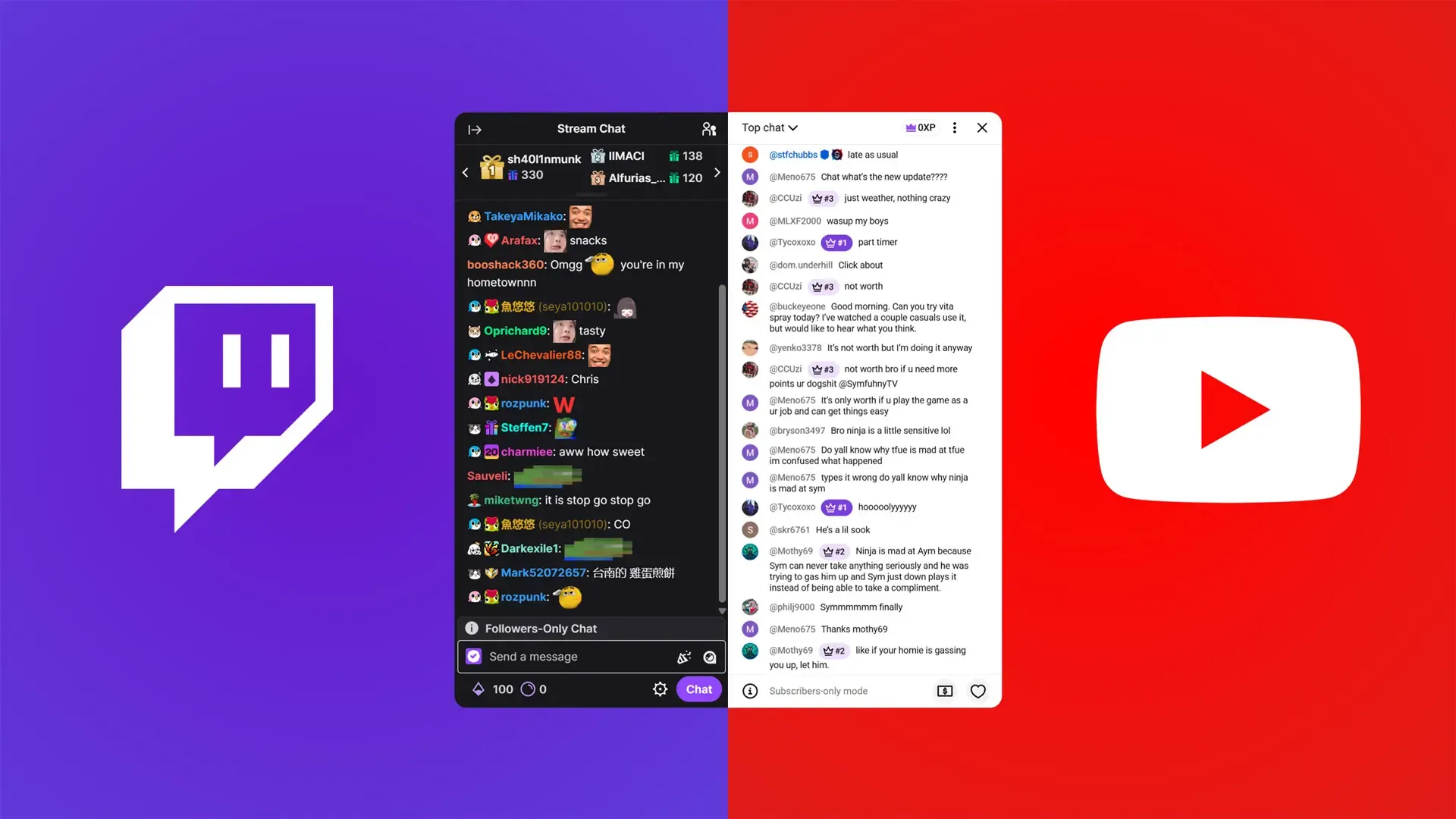
If you multistream to Twitch and YouTube/Kick simultaneously, it makes sense to combine your chats into a single overlay. Your community is your community, regardless of which platform they're watching on. One conversation, one experience.
But when Gigguk revealed last week (opens in a new tab) that he'd received a formal warning from Twitch for displaying a combined chat on his stream, it became clear that Twitch saw things differently:
"I got in a little bit of trouble... apparently it is against TOS to combine Twitch chat and YouTube chat in one... so I got a warning from Twitch... make sure chats are separate." - Gigguk
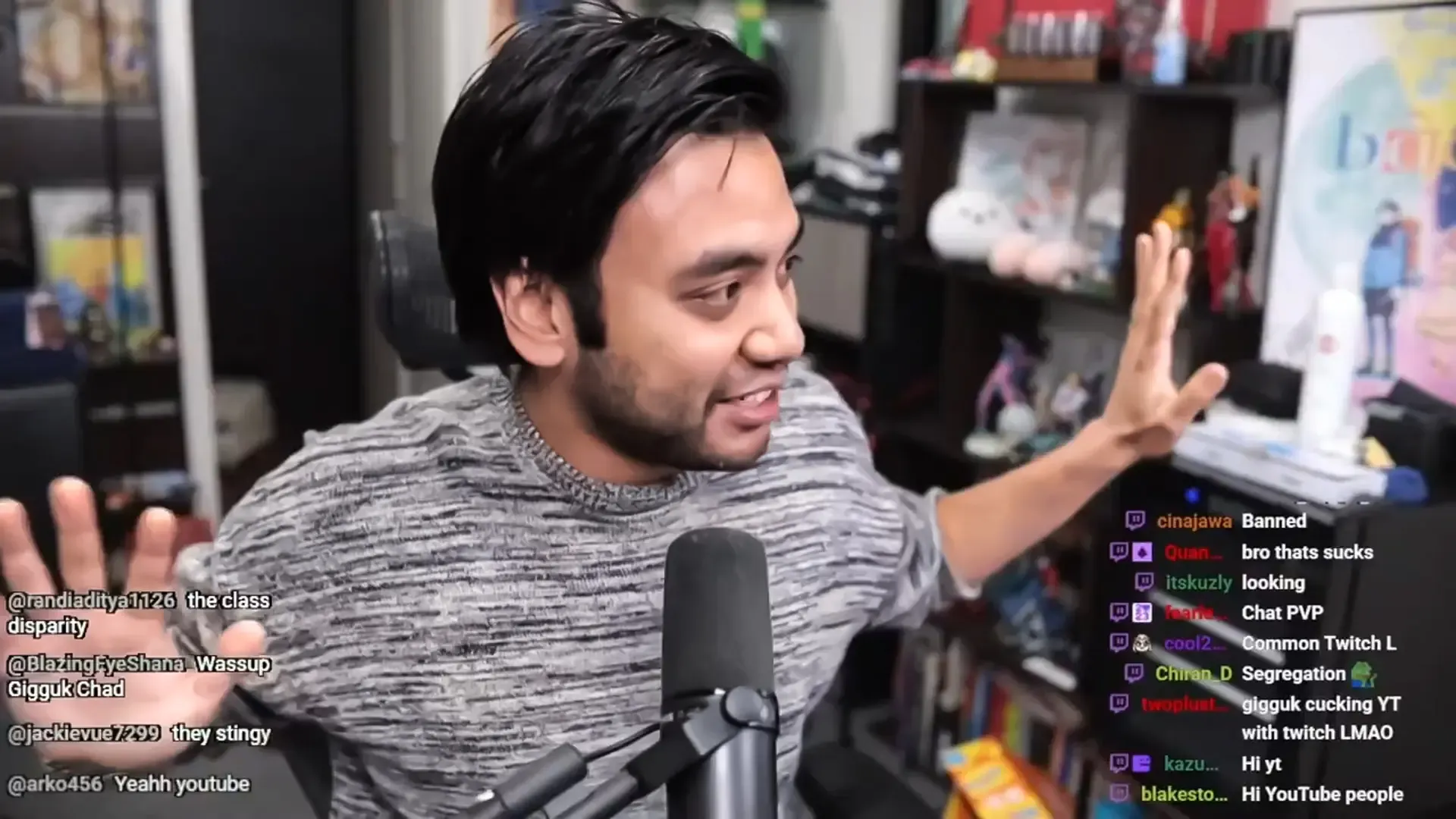
His response was to split the chats into two separate windows, side by side, on his stream. Same information, technically different displays, and the community absolutely ran with it.
The "Safety" Excuse
The rule existed as part of Twitch's multistreaming guidelines. When Twitch finally allowed creators to stream to multiple platforms simultaneously, they included a provision that prohibited displaying chat from other platforms on your Twitch stream.
During last night's Patch Notes stream (opens in a new tab) (Episode 43), CEO Dan Clancy explained the original reasoning. There were two justifications:
- Twitch didn't want third parties building apps that would take Twitch chat and inject it elsewhere, or vice versa. Fair enough. Chat is a core part of the Twitch experience, and protecting that ecosystem is reasonable.
- Twitch felt it was a safety measure. Because Twitch moderates its own chat but can't control what happens on YouTube or Kick, they were concerned that bad actors could say something violating Twitch's community guidelines in a YouTube chat, have it appear on the Twitch stream, and get the streamer suspended for user-generated content they had no ability to moderate.
On the surface, that sounds reasonable. In practice, it's a problem that barely exists. Streamers already have moderators, and most combined chat tools support filtering. The real concern was never about safety, it was about visibility.
What They Actually Didn't Want
Let's be honest about what this rule was really protecting. Twitch didn't want its viewers to see that the streamer was also live on YouTube or Kick. A combined chat is a constant, visible reminder that the creator exists on other platforms, and that viewers have options.
That's a retention strategy dressed up as a safety policy, and the community saw through it immediately.
It's the same instinct that made Twitch resist multistreaming for years. They eventually allowed it because the competitive pressure from Kick and YouTube made exclusivity untenable for smaller creators. But allowing multistreaming while banning combined chat was a half-measure: "Fine, you can stream elsewhere, but don't you dare let your Twitch audience know about it."
The Reversal
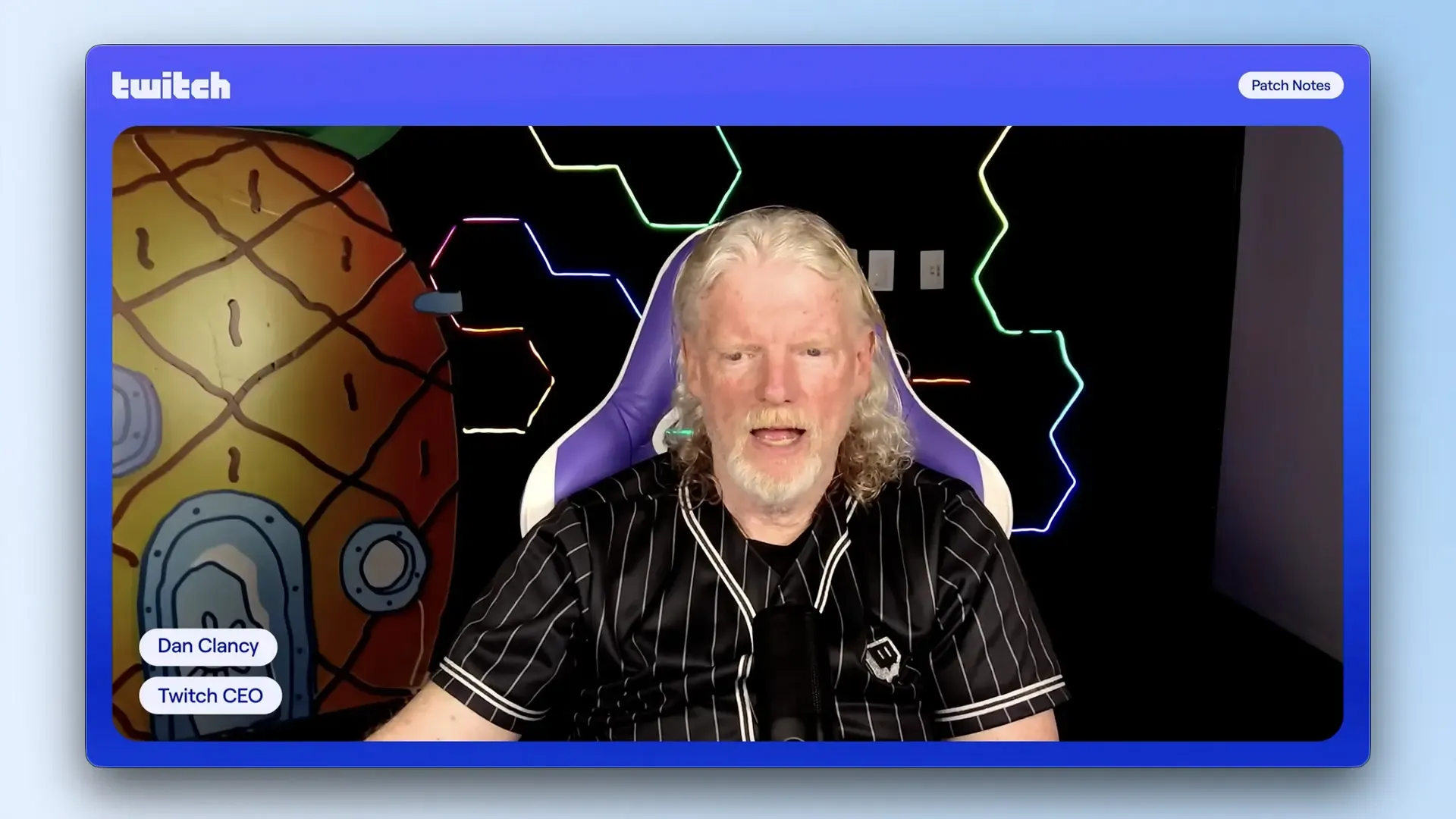
To his credit, Dan Clancy addressed this directly on last night's stream (opens in a new tab) and didn't try to dance around it:
"We are updating our enforcement guidelines to make sure we are not issuing enforcement actions for integrating combined chat on the video from your stream, just such as what happened to Gigguk and what he was doing when he received the warning." - Dan Clancy, Twitch CEO
He did add one caveat: streamers are still responsible for what appears in third-party chat on their stream. If someone says something that violates Twitch's community guidelines in a YouTube chat and it's visible on the Twitch broadcast, the streamer could still face consequences.
That's a fair boundary, though. You're already responsible for everything on your stream, including overlays, media, and user-generated content. This doesn't change that standard, it just stops punishing creators for the act of displaying a combined chat in the first place.
Why This Matters
This isn't just about combined chat. It's about how Twitch writes rules.
The original policy was framed as a safety measure, but it was transparently a competitive one. When the community called it out, Twitch reversed course quickly, which is good. But the fact that the rule existed at all reveals how Twitch approaches multistreaming: as a threat to manage rather than a reality to embrace.
If you've been reading Stream Report for a while, this pattern is familiar. Twitch introduces a policy, frames it as being for the creator's benefit or safety, the community identifies the real motivation, backlash follows, and Twitch walks it back. We saw it with the sub split adjustments and the zero-pay sponsorship.
The good news is that community feedback works. The better news would be if Twitch stopped needing the feedback to get it right in the first place. (opens in a new tab)
Pete’s Content Corner
Delve into my weekly selection of content creation highlights - handpicked videos, podcasts, and tweets that promise to captivate, educate, and entertain.
- Twitch is modernizing its enforcement system (opens in a new tab) by splitting suspensions into two categories: streaming suspensions (which prevent you from going live) and chatting suspensions (which restrict you from chatting in other channels). For lower severity offences, you'll only lose access to the part of the platform where the violation occurred. Higher severity offences will still result in both.
- Discord published a blog post titled acknowledging what went wrong with its age verification rollout (opens in a new tab). The headline: Discord has ended its partnership with Persona after a limited UK test, and is now requiring that any facial age estimation be performed entirely on-device. The global rollout has been delayed to the second half of 2026.
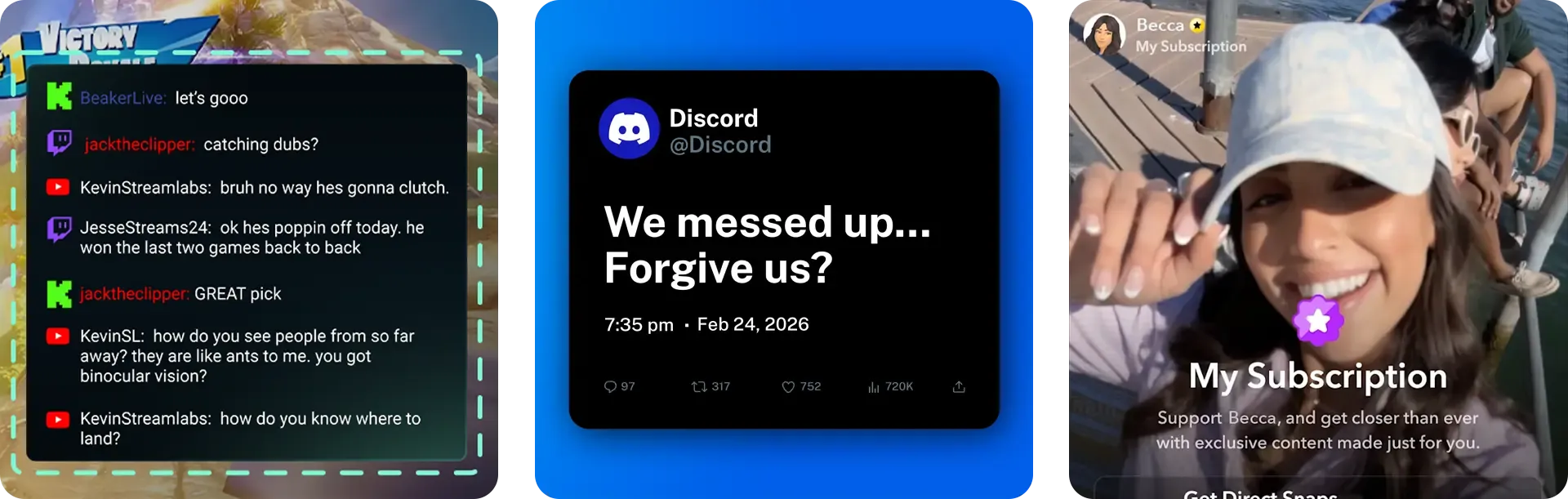
- Snapchat is launching Creator Subscriptions (opens in a new tab). With 25 million Snapchat+ subscribers and $1 billion in annual direct revenue, the platform is quietly becoming an income source for creators.
Thanks, as always, for taking the time to read Stream Report.
Pete ✌️