Twitch's 70% Sub Split Has a Worrying Asterisk
Twitch moved creators on legacy 70% sub split contracts into the Plus Program, promising to honour their rates. But the phrase "at this time" is doing a lot of heavy lifting.
The Three Words That Should Worry Twitch Partners
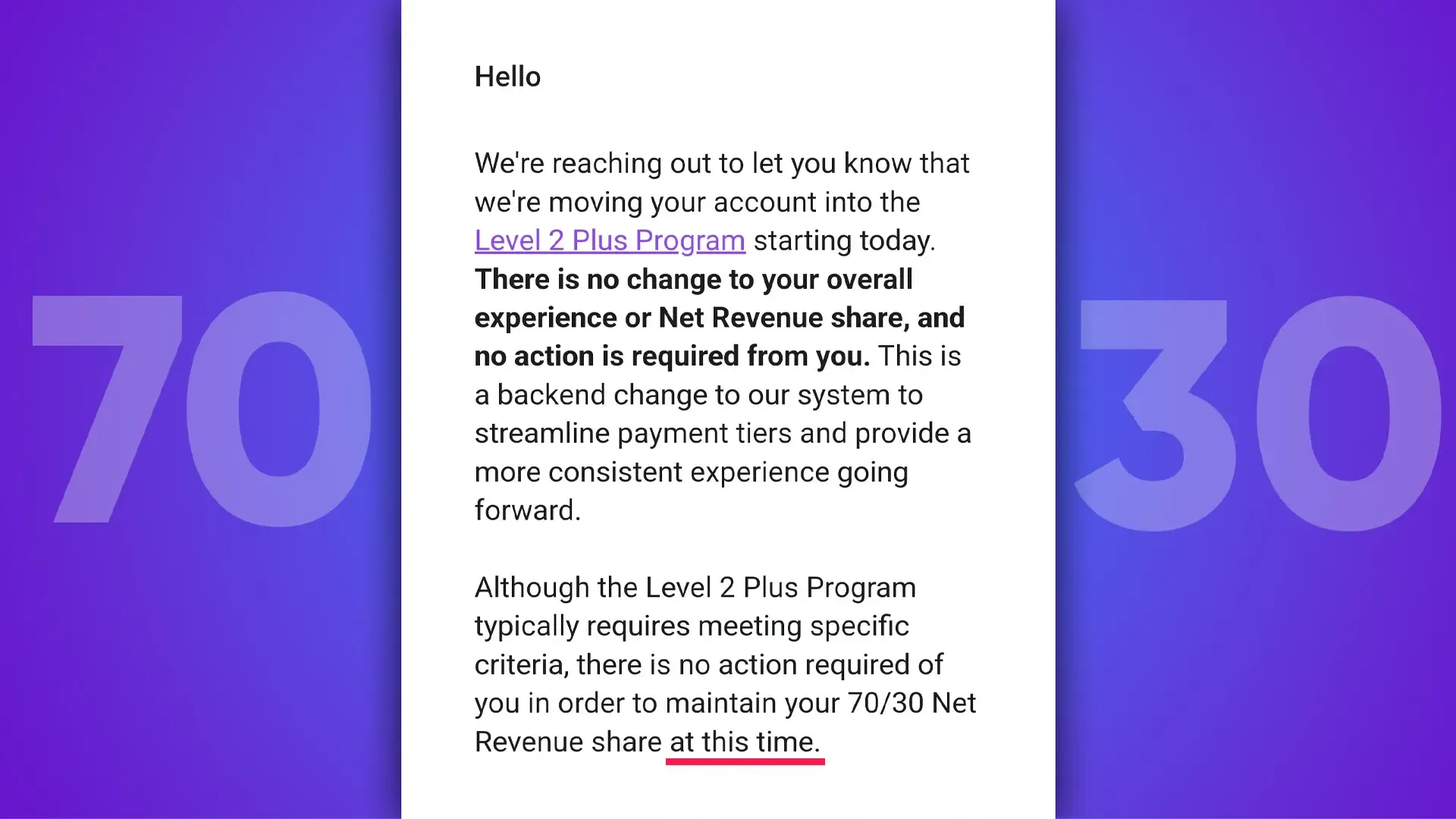
If you're one of the Twitch Partners who negotiated a 70/30 subscription revenue split before the Plus Program existed, you received an email this week that probably made your stomach drop.
Twitch informed legacy contract holders that they've been migrated into the Plus Program as part of what the platform describes as a "technical update." The good news: Twitch says it's honouring existing splits. The bad news: it won't say for how long.
What Actually Happened
For context, Twitch's standard subscription split has historically been 50/50. However, certain high-profile Partners negotiated custom contracts with a 70/30 split, meaning the creator keeps 70% of each subscription. These deals were a major retention tool, especially during the period when platforms like YouTube, Mixer, and Facebook were aggressively poaching talent.
When Twitch launched the Plus Program in 2023, it created a tiered system where creators could earn up to a 70/30 split by hitting specific thresholds (measured in "Plus Points"). But legacy contract holders existed outside this system entirely. Their splits were guaranteed by individual agreements, not by platform-wide rules.
This week's email effectively brought those creators inside the Plus Program umbrella. Twitch insists this is purely administrative (opens in a new tab), a way to consolidate everyone onto the same system. And crucially, they say creators will retain their existing splits.
The "At This Time" Problem
Here's where it gets uncomfortable. When creators and journalists pressed Twitch on whether these legacy splits would be honoured permanently, the response was telling: Twitch said its lawyers won't allow it to be definitive (opens in a new tab).
The phrase "at this time" keeps appearing in Twitch's communications around this change. And anyone who has dealt with corporate language knows exactly what those three words mean. It's not a guarantee. It's a placeholder that preserves the option to change terms later.
This matters because the entire value of a negotiated contract is its certainty. A 70/30 split that exists "at this time" is fundamentally different from a 70/30 split that's contractually guaranteed.
Why Would Twitch Do This?
There are a few possible motivations, and they aren't mutually exclusive:
Simplification: Managing two parallel systems (legacy contracts and the Plus Program) is administratively messy. Consolidating everyone into one framework makes the platform easier to run. This is the most charitable interpretation, and it's probably partially true.
Flexibility: By moving legacy creators into the Plus Program, Twitch gains the ability to adjust their splits through program-wide changes rather than needing to renegotiate individual contracts. If Twitch ever decides to restructure the Plus Program tiers, legacy creators would be affected too.
Cost control: We've been covering Twitch's push toward profitability for years now. Amazon has made it clear that Twitch needs to justify its existence financially. Legacy 70/30 deals are expensive, and having them locked into individual contracts limits Twitch's ability to optimise its revenue share model.
A Pattern We've Seen Before
If you've been reading Stream Report for a while, this story should feel familiar. We covered the launch of the Plus Program and its various adjustments, including the LATAM-specific changes last year. We also covered the Sponsorship Dashboard launching with below-market rates, and the zero-pay "sponsorship" that followed.
The through-line is consistent: Twitch keeps testing how much it can reduce creator compensation before the community pushes back hard enough to force a reversal. Each change is framed as a technical improvement or an opportunity. Each one shifts a little more leverage away from creators.
The Bottom Line
Twitch says it's honouring legacy contracts. That might be true today. But by moving everyone into a single system and refusing to make permanent commitments, they've given themselves the mechanism to change the deal whenever they decide to. The question isn't whether Twitch will honour legacy splits. It's whether "at this time" has an expiry date.
Pete’s Content Corner
Delve into my weekly selection of content creation highlights - handpicked videos, podcasts, and tweets that promise to captivate, educate, and entertain.
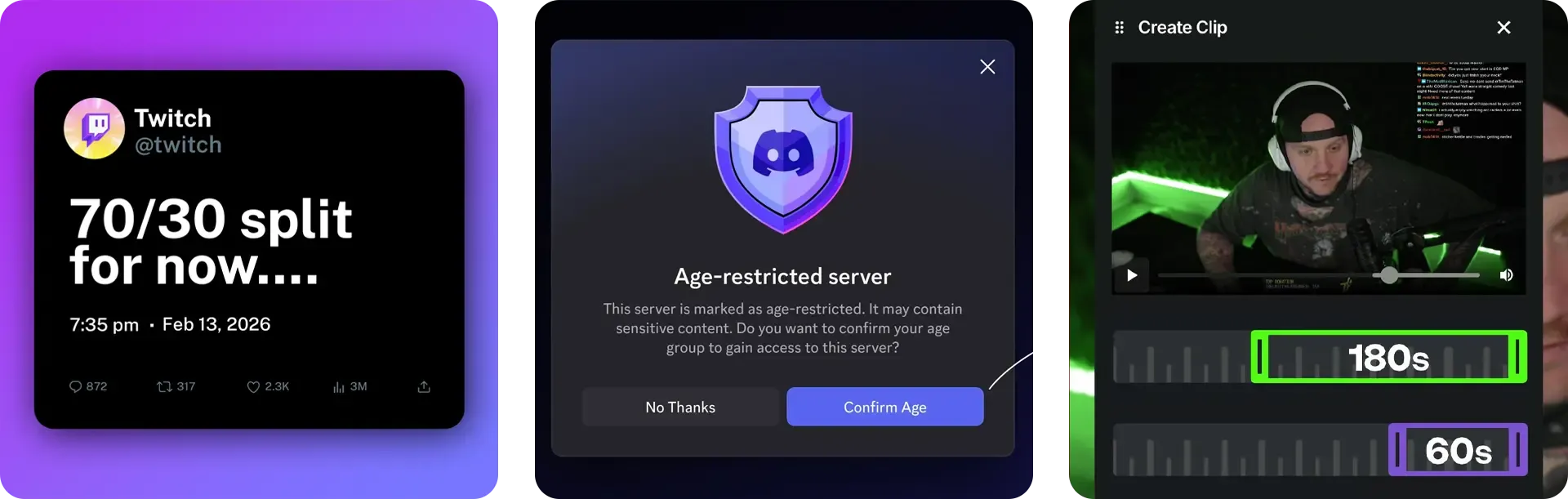
- YouTube is running a small experiment where people with "All Notifications On" who don't engage with them will stop receiving notifications (opens in a new tab). The goal is to address notification fatigue, but it's worth monitoring if you rely heavily on notification-driven traffic.
- Discord responded to widespread criticism (opens in a new tab) of its age-assurance update, saying the "vast majority" of adults won't need to verify their accounts. Meanwhile, TeamSpeak has seen a surge in interest (opens in a new tab) amid the pushback, and is working to increase server capacity for new users.
- Kick has launched 180-second clips (opens in a new tab), three times the length of a Twitch clip. It's a small feature, but clip length has been a long-standing complaint from communities that want to capture longer moments without resorting to VOD timestamps.
Thanks, as always, for taking the time to read Stream Report.
Pete ✌️