Stream Report Issue #238
YouTube Changed What Counts as a View
 By Pete Wilkins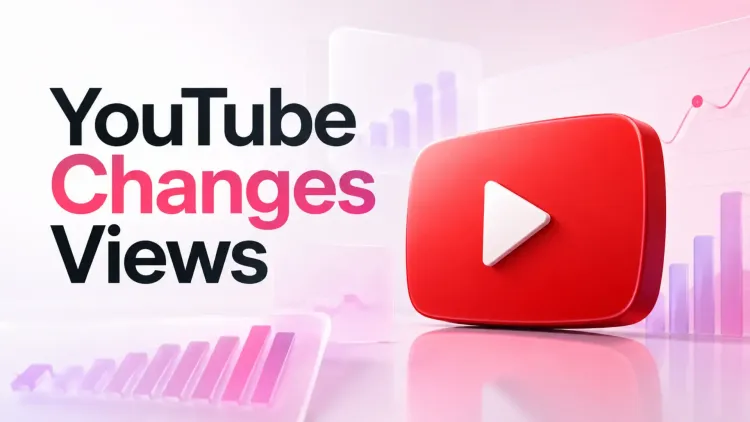
YouTube now counts a public view (opens in a new tab) the moment a video begins to play, from the very first frame, and that applies globally across long-form videos, live streams, podcasts and Shorts alike.
Before Monday, a long-form video needed some amount of playback before it registered a view, which meant an autoplay that someone scrolled straight past wouldn't count towards your total. From Monday it does. YouTube's reasoning is consistency, since Shorts moved to this standard last year and the platform had been running several different counting systems side by side.
Historically, we've used multiple view counting systems across different formats. However, we've heard that creators want to eliminate this metric confusion and accurately understand their true exposure, which is why we're making this update! - YouTube
They're also fairly upfront about the effect, saying creators will likely see their total view counts increase faster from here on. That brings long-form into line with TikTok, Instagram and Facebook, all of which have counted views this way for years.
This doesn't change what you earn
The good news is that your earnings aren't affected by any of this, and neither is your eligibility for the Partner Program.
What has changed is the naming, and it's more confusing than it needs to be, because earnings and YPP entry are measured with two different sets of metrics:
Views
- What it covers: Every play, from the first frame
- Where you'll find it: Public, under the video
Engaged views
- What it covers: Viewers who carried on watching
- Where you'll find it: Analytics, Advanced Mode
Engaged Watch Hours and Engaged Shorts views
- What it covers: What your earnings are based on
- Where you'll find it: Analytics, Advanced Mode
Qualified watch hours and qualified Shorts views
- What it covers: What YPP entry is measured against
- Where you'll find it: Analytics, Advanced Mode
Those last two used to be called valid public watch hours and valid public Shorts views. Nothing about how they work has changed, so the higher thresholds arriving in February 2027 are still being measured against numbers that didn't move on Monday. You could watch your public count climb quite noticeably over the next few months without getting any closer to monetisation than you were last week.
The clickbait/slop panic is overblown
A lot of the reaction this week has argued that counting from the first frame is a gift to clickbait channels and AI slop farms, on the basis that they no longer need to hold anyone's attention to build up a view count.
I'm not convinced that holds up. The thing deciding which videos get recommended and pushed onto people's home pages is the algorithm, and none of that has changed this week. It still weighs watch time and retention heavily, so a video people click off after four seconds is going to get buried regardless of what number is sitting underneath it. Slop channels will see their view counts go up, but so will everyone else's, which leaves the relative picture roughly where it was.
Why I think YouTube actually did this
This looks a lot more like an advertising decision than a creator one. YouTube is competing with TikTok and Meta for the same brand budgets, and those platforms have been counting views from the first frame for years, so any media buyer comparing options across platforms was looking at YouTube figures built on a stricter definition than everybody else's. That made YouTube's numbers come out lower even where a video had performed just as well.
Comparing old videos with new ones
If you want to know how something you published this week did against a video from June, the two public numbers aren't built the same way any more. To get a fair comparison you need engaged views, which is the old metric under a new name:
- Open YouTube Studio and go to Analytics
- Switch to Advanced Mode
- Add Engaged views as a column alongside your public figure
YouTube's Help Centre article (opens in a new tab) covers the new metric in more detail.
If you sell sponsorships, it's also worth taking another look at any rate card you've priced on public view counts. Brands are usually slow to catch up with platform changes like this one, so expect a few months where integrations are still being quoted against views when engaged views is really the number they're after, or where the figures need scaling to account for the inflation.
Pete’s Content Corner
My weekly picks from across the content creation world.
- Twitch has opened Sponsorships to Affiliates worldwide (opens in a new tab), after Minecraft campaigns earlier this year where over half the paid participating streamers were Affiliates. You'll need to be Creator Sponsorship Certified to be eligible, and a new Wehype partnership is surfacing third party offers, starting with an EA campaign for Battlefield.
- Patreon has published a roadmap post (opens in a new tab) covering around 30 features, the pick being a discovery algorithm that now compares posts against other posts rather than creators against other creators. Jack Conte is unusually direct about why, telling smaller creators the lack of discovery "is not your fault. It's ours."
- Bloomberg reports that YouTube is offering top creators millions (opens in a new tab) to premiere projects on the platform and skip a simultaneous Netflix release, with financing and brand deals in exchange for an exclusive window. Those who sign with Netflix risk losing out on YouTube marketing campaigns and creator events.
Thanks, as always, for taking the time to read Stream Report.
Pete ✌️