YouTube’s AI Defense: Likeness Detection Goes Live
YouTube is rolling out its Likeness Detection tool to all Partner Program creators, offering the first major platform solution for AI-generated deepfakes. But the community has serious questions about the data YouTube's collecting to make it work.
YouTube Protects Creator Likeness (But at What Cost?)
YouTube just announced they’re expanding their Likeness Detection (opens in a new tab) tool to all creators in the YouTube Partner Program over the next few months. After testing with a small group of creators, they’re ready to give everyone access to technology that detects when someone’s using AI to generate videos with your face.
YouTube is the first major platform to openly address how they plan to handle AI-generated content that uses creators’ likeness without permission. While tools like OpenAI’s Sora happily let you create videos using anyone’s face, YouTube is at least attempting to give creators some control.
How It Works
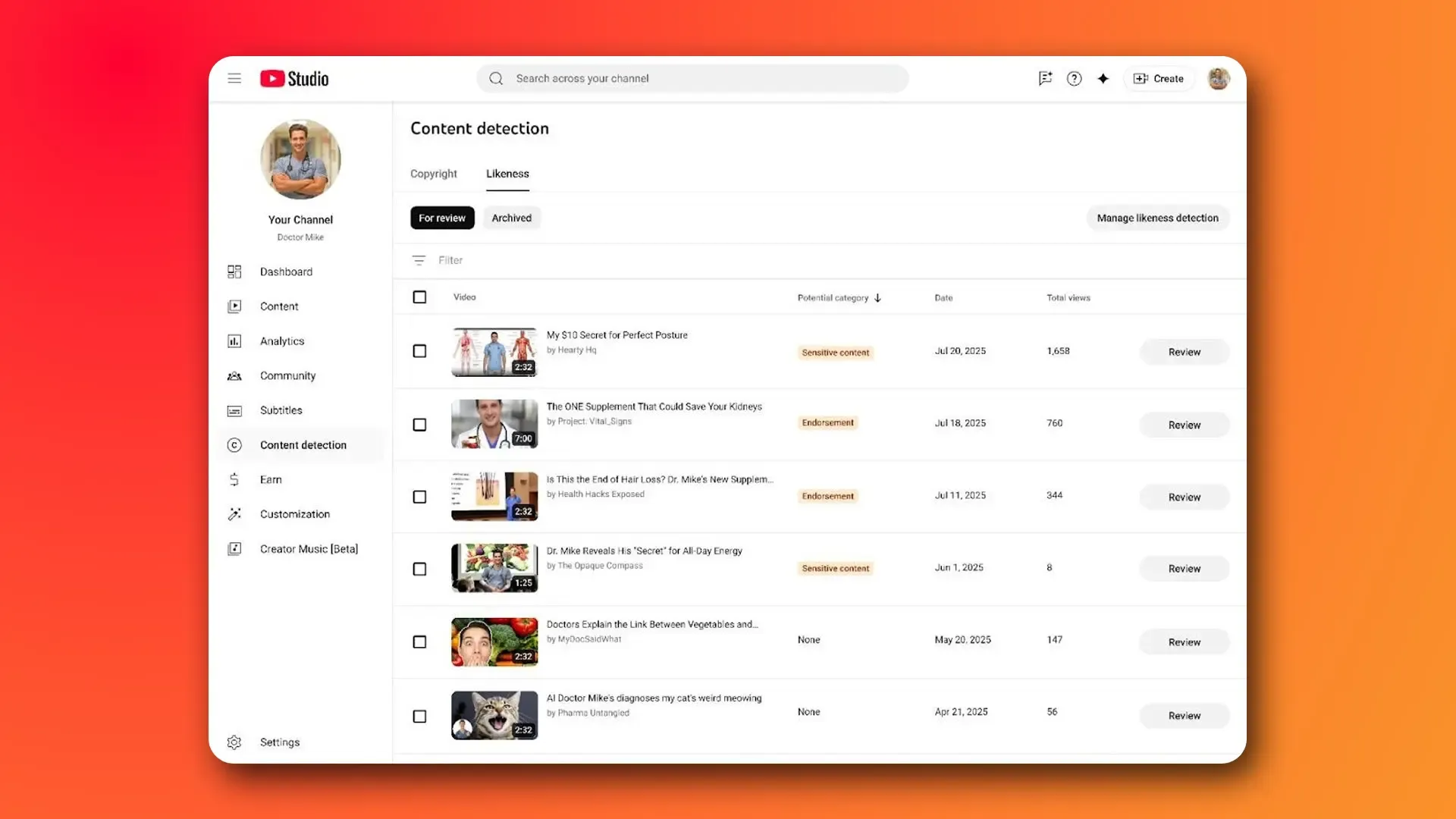
The tool lives in YouTube Studio under a new Content Detection tab. Here’s the process:
The Onboarding:
- Scan a QR code with your phone and upload a government-issued photo ID
- Record a selfie video following on-screen prompts
- Wait a few days while Google verifies your identity
The Monitoring:
- YouTube scans for videos using synthetic versions of your likeness
- Matches appear in your dashboard with priority flagging, view counts, and upload dates
Taking Action:
- Review detected segments where your likeness appears
- Submit removal requests under Privacy Guidelines or file copyright claims
- Archive videos you don’t want to pursue
Why This Matters
Credit where it’s due: YouTube is tackling a problem that’s only going to get worse. As AI video generation becomes more accessible and convincing, we’re already seeing fake celebrity endorsements for scam products, political misinformation using synthetic video, and impersonation schemes targeting creators’ audiences.
Having a system that proactively scans for this content and gives creators a streamlined way to address it is better than waiting until the problem becomes unmanageable.
The Community’s Privacy Concerns
To use this tool, you must provide government-issued photo ID and biometric facial data via recorded selfie video. The creator community has raised concerns about whether Google will use this data to train their own AI models, and what happens if this database of sensitive information gets hacked.
While it’s worth noting that Google already has access to far more (and better) data through YouTube and their other services, making dedicated AI training from this dataset unlikely, the concerns about data security are entirely valid. You can withdraw consent and stop using the tool at any time, though that happens after you’ve already provided the information.
Who Should Actually Use This?
If you’re a larger creator, enabling this tool proactively can make sense. If fake brand endorsements start popping up with your face, you don’t want to be waiting days for your verification to be approved just to get that content removed from the platform.
For smaller creators who haven’t seen their likeness misused, the urgency is lower. You might want to wait and see if it becomes a problem before handing over sensitive identity data.
Looking Forward
YouTube’s Likeness Detection tool is rolling out over the next few months to all Partner Program creators. The fundamental question now is: when (and how) will other platforms tackle this problem?
It’s an expensive feature to implement properly, requiring significant infrastructure for facial recognition and ongoing monitoring. But the wave of AI-generated content is accelerating. It’ll be interesting to see how long competitors wait before they’re forced to follow, and whether they take the same approach as YouTube.
Pete’s Content Corner
Delve into my weekly selection of content creation highlights – handpicked videos, podcasts, and tweets that promise to captivate, educate, and entertain.
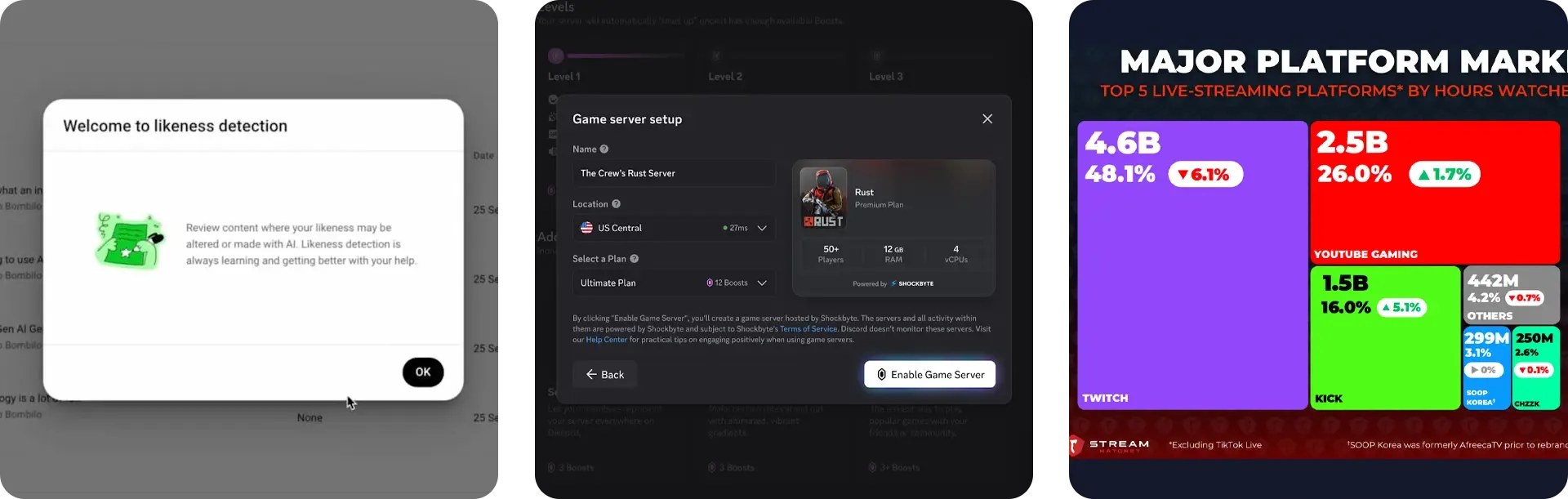
- Stream Hatchet released their Q3 report on Live-Streaming Trends (opens in a new tab), revealing Twitch dropped below 50% market share for the first time, partly due to their major viewbotting crackdown. The report includes case studies on Kai Cenat’s Mafiathon, brand campaigns, and more.
- Discord is gearing up to launch Game Server rentals (opens in a new tab), a feature that lets you transform Server Boosts into dedicated game servers for popular titles like Palworld, Rust, Enshrouded, and 7 Days to Die, creating seamless multiplayer gaming experiences for your community.
- Data collected by CommanderRoot suggests around half of new accounts created on Twitch in the last 6 months are Russian (opens in a new tab). While the platform has grown in Russia, this is more likely related to account creation for viewbotting operations.
Thanks, as always, for taking the time to read Stream Report.
Pete ✌️