Twitch Responds to the ‘Cheating’ View Bots Scandal
We delve into Twitch's response to legal view botting, explore the wealth of data on our new Twitch statistics page, and uncover strategies for success in the attention economy.
Twitch Finally Cracks Down on View Botting Scandal

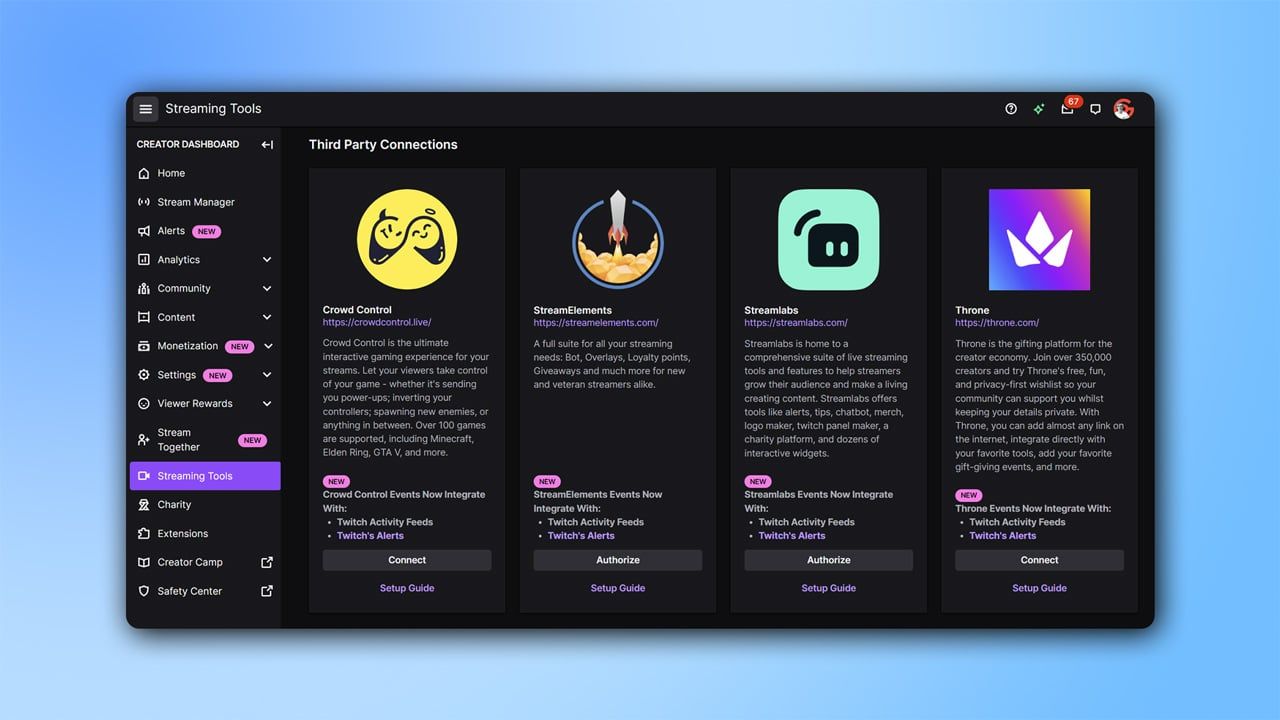
In response to the ongoing controversy of “legal view botting”, Twitch CEO Dan Clancy has reportedly proposed a solution to disable autoplay (opens in a new tab) on streamers who abuse embeds. The issue, which involves streamers embedding their Twitch streams onto third-party websites to artificially inflate viewership, has been a significant concern for the platform and its users.
Key developments include:
- Gaming site Fextralife, which has over 1.6 million followers on Twitch, has been accused of using this method to inflate its viewership (opens in a new tab). The discrepancy between the site’s viewership numbers and the amount of chat activity on its streams has raised suspicions.
- The issue first gained attention in 2021 when YouTube star Ludwig accused Fextralife of stealing views (opens in a new tab) by embedding streams on their game wikis. The controversy resurfaced with the release of Baldur’s Gate 3 in 2023, leading to widespread criticism of the site’s alleged shady practices.
- Twitch streamer Gothalion revealed in an October 2 broadcast that he had received an email (opens in a new tab) from Twitch CEO Dan Clancy. In the email, Clancy asked for a shortlist of offenders who exploit embedded streams and proposed disabling autoplay on these websites as a temporary solution.
- Clancy described this as a “quick and dirty” fix while they work on a more sustainable long-term plan. He specifically mentioned Fextralife (opens in a new tab) as one of the worst offenders and requested a list of similar culprits.
- This news has been positively received by many in the Twitch community, who believe that autoplay embeds can disadvantage streamers (opens in a new tab) producing high-quality, thoughtful content by promoting bigger streams that gain views from embeds.
The proposed solution from Twitch’s CEO is seen as a significant step towards addressing the issue of legal view botting.
Twitch Insights Unveiled: Past, Present, and Future
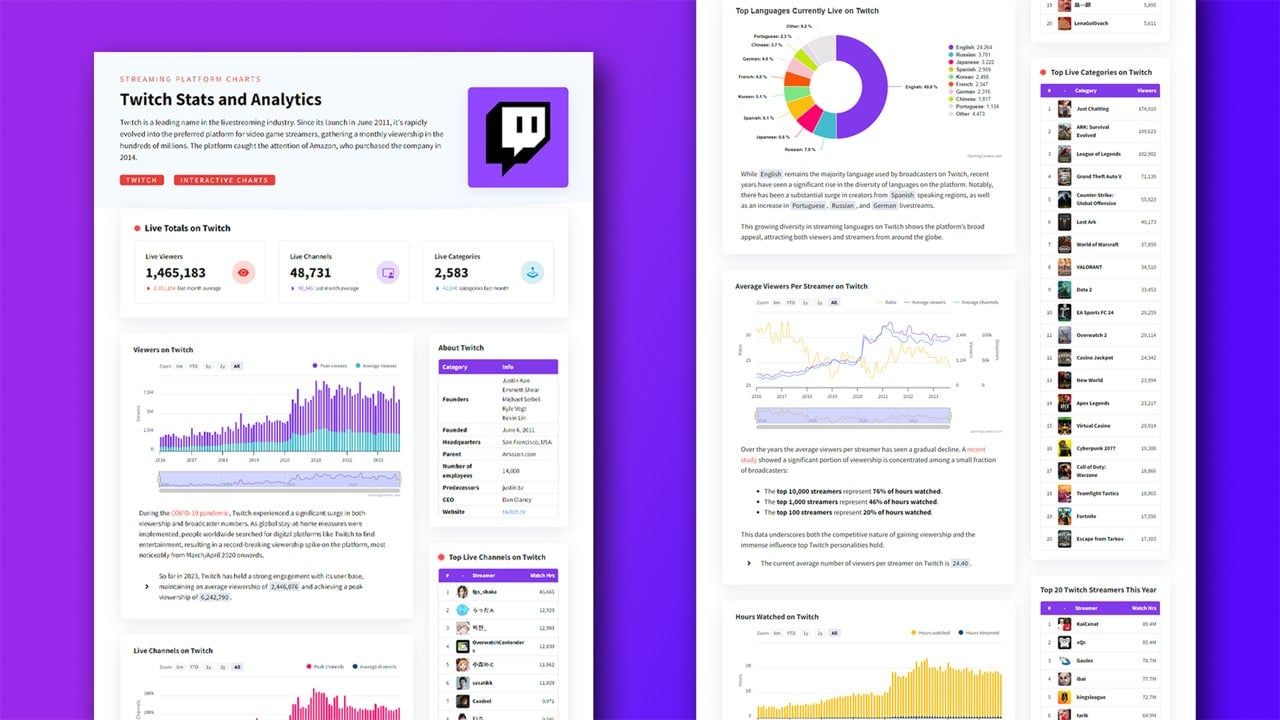
We at Gaming Careers are excited to introduce our new Twitch statistics page, a comprehensive tool designed to help streamers better understand and navigate the dynamic world of Twitch. By offering a wealth of data, from real-time statistics to historical trends, we aim to equip streamers with the knowledge they need to optimize their content, engage effectively with their audience, and successfully monetize their streams.
Some of the key statistics featured on our page:
- Viewership
- Live Channels
- Top Languages Currently Live
- Average Viewers Per Streamer
- Hours Watched
- Average Streamers
- Active Partners & Affiliates
- Top Channels Currently Live
- Top Categories Currently Live
- Top 20 Streamers This Year
- Top 10 Categories This Year
All charts are fully interactive, so you can dig into the trends and learn how Twitch as a platform has changed over time. We’ve also included a timeline of Twitch’s history. From its beginnings as Justin.tv in 2007, through its transformation and Amazon acquisition, to its current status as a livestreaming giant.
We believe this tool will be invaluable for creators in the industry. By providing a clear view of the platform’s past and present, we aim to help streamers strategize their future growth, making the most of the opportunities Twitch has to offer.
Key Strategies for Success in the Attention Economy
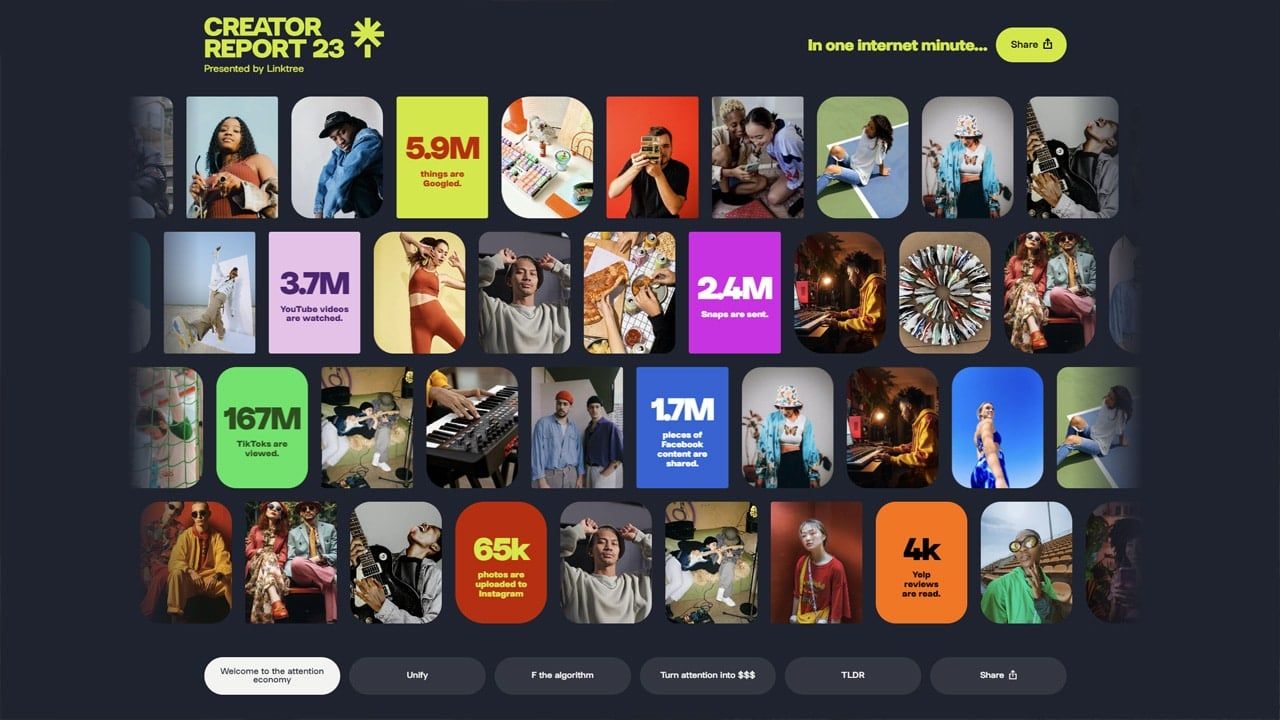
In the latest annual Creator Report by Linktree (opens in a new tab), it was revealed that the internet is a battleground for the attention of more than 200 million content creators. With the human attention span now a third of what it was in 2004, the struggle to capture and retain audience interest is more challenging than ever.
The internet is a fragmented place, with creators posting links to numerous different websites. The most popular sites creators link to are Instagram, YouTube, and TikTok, which make up only 25% of the total links (opens in a new tab) created on Linktree since the start of 2022.
In terms of monetization, the report reveals that 50% of creators have made money (opens in a new tab) from their content in the last 12 months. Within that:
- 72% of creators are making less than $500
- 17% of creators are making between $500-$5k
- 5% of creators are making between $5k-$10k
- 4% of creators are making between $10k-$50k
- 2% of creators are making over $50k
There is a growing opportunity for creators to monetize through direct payment features like tips and paid subscriptions, both of which are prominent across livestreaming platforms.
Lastly, the report highlights the power of affiliate marketing (opens in a new tab). It reveals that a third of all adults and more than half of Gen Z and Millennials say content creators influence their buying decisions.
News Highlights
- An insightful engineering article (opens in a new tab) was posted explaining how Twitch works.
- Twitch introduces a watch streak (opens in a new tab) progress bar and notification system to enhance the Channel Points experience.
- Twitch’s Partner Plus program kicks off with a new dashboard (opens in a new tab) and updated resources (opens in a new tab).
- YouTube lowers partner program eligibility (opens in a new tab) threshold in 24 countries, expanding access.
- YouTube unveils a video exploring Create and AI tools (opens in a new tab) in greater depth.
- Twitter/X initiates tests for livestreaming capabilities (opens in a new tab) from OBS.
- Kick reaches a milestone with 20 million users (opens in a new tab) and 1 million concurrent viewers (opens in a new tab).
- TikTok pilots a $4.99 per month ad-free plan (opens in a new tab) in the USA.
- Forbes unveils its Top 50 Creators (opens in a new tab) of 2023, featuring several prominent gaming creators and livestreamers.
- QTCinderella and Maya Higa’s Gala for Good (opens in a new tab) charity event raised over $235k, with Ludwig winning a year’s use of Twitch’s Golden Kappa (opens in a new tab).
- Lex Fridman and Mark Zuckerberg host a podcast in the metaverse (opens in a new tab).
- Hyper-realistic deepfake ad (opens in a new tab) featuring MrBeast highlights the alarming potential for future scams.