Stream Report Issue #224
Twitch Will Now Cap Your Viewers If You Viewbot
 By Pete Wilkins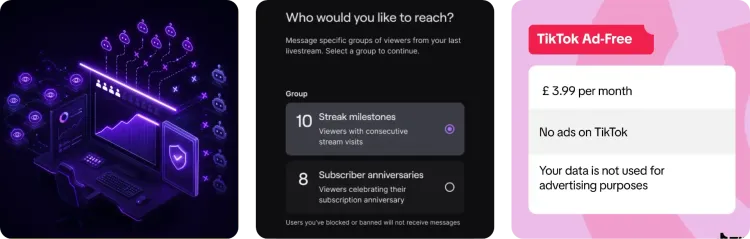
Twitch's New Viewbot Punishment Changes Everything
Back in July 2025, I covered Twitch's first serious viewbot crackdown, when the platform rolled out improved detection systems that filtered artificial viewers from counts. At the time, I noted that all Twitch could really do was make viewbotting harder and more expensive, hopefully enough to discourage most creators from attempting it.
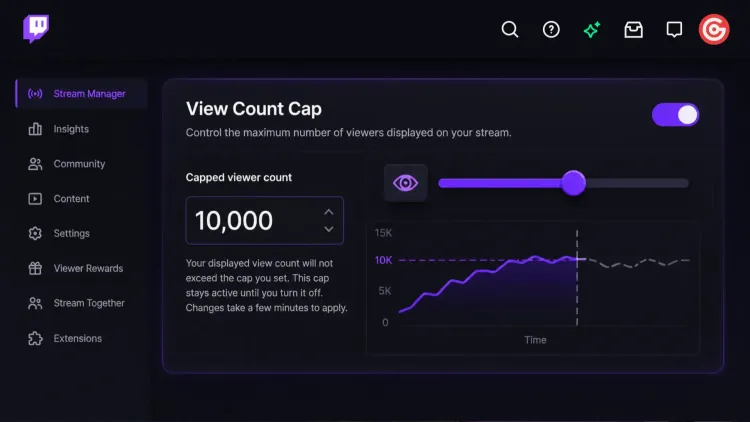
Now Twitch is taking that a step further. Dan Clancy announced that streamers caught persistently using viewbots will have their concurrent viewership capped.
How the Cap Works
The concept is straightforward. If Twitch determines you're using third-party tools to inflate your viewer count, your channel's concurrent viewership (CCV) will be temporarily limited to a number based on your historical non-viewbotted traffic. The cap applies across all Twitch surfaces, so it affects your discoverability on the browse page, in recommendations, and everywhere else.
Repeat violations lead to longer cap durations. Streamers get notified when a cap is applied, along with how long it will last, and can appeal through Twitch's standard appeals portal.
Why a Cap and Not a Ban?
This is a smarter approach than banning. A ban removes the streamer entirely, which is heavy-handed for something that can be difficult to prove definitively. A viewership cap does something more targeted: it takes away exactly what the viewbotter was trying to gain. Use fake viewers to climb the browse page, and now your real ceiling ends up lower than it would have been without cheating.
It also means Twitch isn't removing content or denying someone their livelihood. The streamer can still go live, still earn from their real audience. They just can't benefit from inflated numbers.
The obvious concern is weaponization. Someone could viewbot a competitor's channel just to trigger a cap on them. Twitch has dealt with this problem before. In the July 2025 crackdown, they explicitly said they wouldn't punish streamers for being targeted by bots they didn't control. The language this time is focused on "persistent" offenders, which suggests Twitch is looking for patterns of intentional use rather than one-off bot attacks. But how reliably they can distinguish between the two remains to be seen.
Clancy is deliberately withholding details about how and when enforcement will be applied. The logic is that sharing specifics makes it easier for viewbot companies to work around the system. That's fair from a security standpoint, but it also means streamers won't have full transparency into what triggers a cap.
Viewbotting Isn't Just a Twitch Problem
The same week Twitch announced this policy, IShowSpeed confirmed (opens in a new tab) that his May 6 livestream from the Dominican Republic, which appeared to peak at 1.92 million concurrent viewers on YouTube, was viewbotted. His actual peak was around 300,000.
StreamsCharts flagged (opens in a new tab) that while his viewership jumped by over 2,000%, his chat activity only increased by about 31%. The viewership curve was also unusually flat, lacking the natural fluctuations you see in real live audiences. Speed said someone else botted the stream and that he found out after speaking with YouTube directly.
If YouTube has a similar viewbotting problem to Twitch (and this incident suggests it does), the question is whether YouTube will adopt comparable enforcement tools. Right now, YouTube doesn't have a public-facing viewbot policy anywhere close to what Twitch is building.
The Bigger Picture
I've covered viewbotting three times in Stream Report now: the Fextralife scandal in 2023, Twitch's detection improvements in July 2025, and Kick admitting that up to $150 million in viewership on their platform was artificial in November 2025.
The pattern is clear across every platform: viewbotting undermines trust for creators and the advertisers who fund them. Every time a "record-breaking" number turns out to be fake, it makes it harder for legitimate creators to prove their value to brands and sponsors. Twitch's CCV cap is a creative solution, but as with every previous measure, it will only work as long as Twitch stays ahead of the bot makers. And that's the part that never gets easier. (opens in a new tab)
Pete’s Content Corner
My weekly picks from across the content creation world.
- Twitch is testing a new feature called Streamer Shouts (opens in a new tab), which lets streamers send a short, personalized note to viewers when they hit a stream achievement like a Watch Streak or Subscriber Anniversary. A small touch, but anything that lets creators personally acknowledge milestones without interrupting the stream is a smart addition.
- TikTok has launched a £3.99/month ad-free subscription (opens in a new tab) in the UK, offering users the option to remove all platform-served ads. Subscribers' data also won't be used for ad targeting. The rollout will expand gradually over the coming months.
- Twitch has kicked off IRL Takeover week (opens in a new tab) (May 11-17), featuring IRL streamers on the front page shelf. Viewers can unlock a limited gilded IRL chat badge by watching 15+ minutes of any featured IRL stream.
Thanks, as always, for taking the time to read Stream Report.
Pete ✌️